Septic tank repair or replacement: which one do you need?
In Alabama the line between a repair and a replacement is drawn by rule, not opinion. If the amount and strength of wastewater have not changed, the fix is a repair. A replacement comes when the flow changes, when the owner asks for a new system, or when a health or environmental problem demands it. Most tank problems fall on the repair side, and lids, baffles, inlet and outlet fittings, filters, and pumps count as maintenance with no permit at all.
Cost follows the same split. Component repairs run about $50 to $1,600 in The Septic Guide’s March 2026 data. A new tank runs $3,000 to $7,000. A tank and drain field together run $8,000 to $20,000 or more. Septic tank repair in Piedmont and Northeast Alabama is the call we take most, and the estimate is free.
Which septic problems are repairs?
Alabama’s onsite sewage rules define maintenance as pumping the tank, cleaning or replacing the filter, replacing solid supply lines and headers, any electrical or mechanical work, and repairing a baffle, inlet, or outlet fixture. None of that needs a permit from the county health department. ADPH’s own repair page says the same thing in plain words: a new lid, baffle, inlet, outlet, filter, or pump does not require a Permit to Repair.
A repair in the rule’s sense goes one step further. It is a corrective action on a failing part of the system where the flow and waste strength have not changed. Replacing a cracked tank on the same house is a repair. Replacing a section of field line is a repair. Those need a Permit to Repair from the county health department, though the county can give verbal authorization on a conventional system and take the paperwork within ten days.
The practical list of repairs we see most often in Calhoun, Etowah, and Talladega counties:
- Baffles and tees that have crumbled and let solids into the field
- Cracked or sunken lids and risers
- Broken inlet lines between the house and the tank
- Distribution boxes that have shifted and send all the flow down one trench
- Effluent pumps and floats on pump systems
- Roots in the tank or the lines
- Cracked tank walls that can be sealed while the shell is still sound
Every one of those is cheaper than a new system. Every one also gets found the same way: the pumper spots it during a pump out and, under Alabama’s rules, reports a failure to the health department. Regular septic tank pumping is the cheapest inspection you will ever buy.
When does a septic tank have to be replaced?
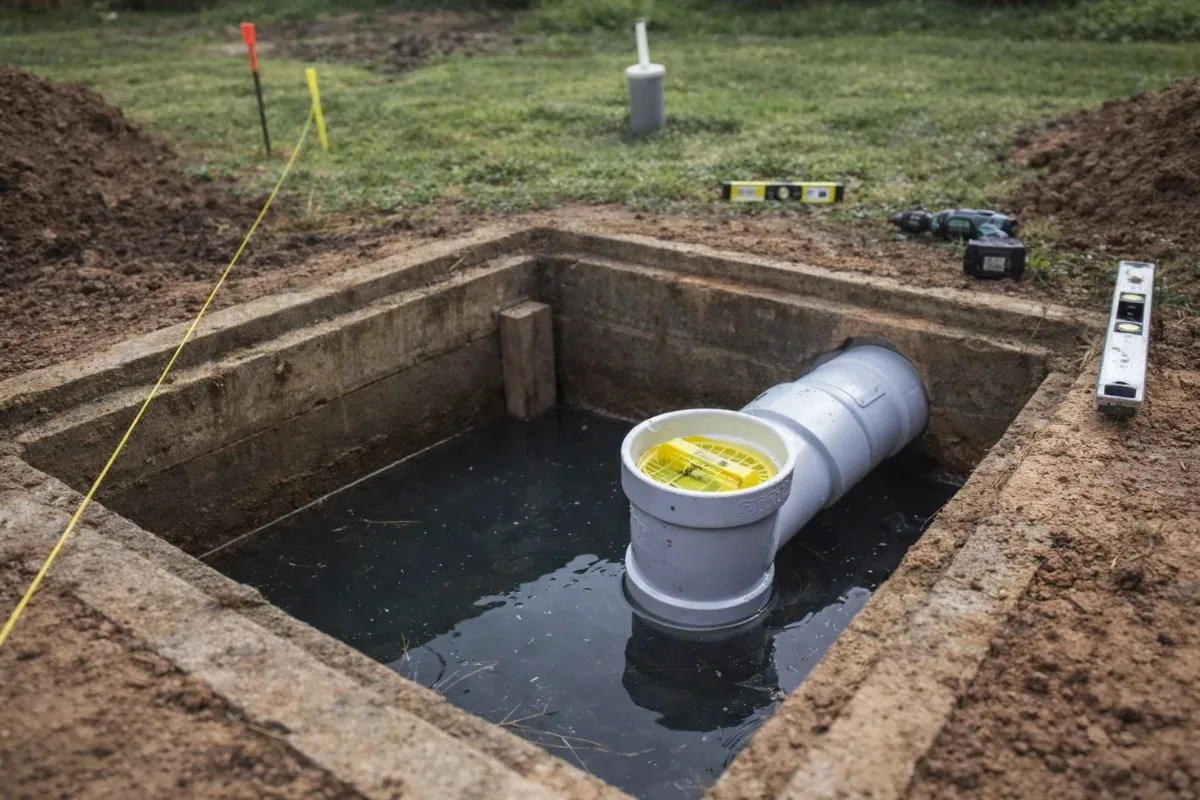
The tank gets replaced when the shell itself has failed. Concrete corrodes from the top down. Gas above the waterline forms a weak acid that eats the baffles first, then the lid and the upper walls. When the walls have thinned enough to let groundwater in or to threaten collapse, the tank is done. Steel tanks are worse. They rust through the top in 15 to 25 years, and This Old House no longer recommends them for new installs at all.
A second trigger is size. If you add bedrooms, the flow changes, and Alabama’s rule treats the work as a relocation. A replacement system is considered new and has to meet every current rule, including tank size by bedroom count and a full replacement field area.
A third trigger is the field, not the tank. When the drain field stops taking water, no amount of tank work fixes it. That is drain field repair or replacement, and it is the expensive half of the system. On a hard lot the replacement may turn into an engineered septic system.
Alabama also says what happens to the old tank. It has to be pumped out by a licensed pumper, then removed or filled with sand or soil, with the bottom ruptured if it stays in the ground. That is a real line on a replacement quote.
How much does septic repair cost versus replacement?
The Septic Guide’s March 2026 pricing puts the average repair job at $600 to $3,000. The parts break down like this.
| Job | Typical cost (The Septic Guide, March 2026) |
|---|---|
| Effluent filter cleaning or replacement | $50 to $200 |
| Tank lid replacement | $100 to $300 |
| Riser install or repair | $200 to $400 |
| Baffle repair or replacement | $250 to $900 |
| Septic pump replacement | $500 to $1,300 |
| Distribution box replacement | $500 to $1,500 |
| Cracked tank patching | $500 to $850 |
| Root removal from pipes or tank | $600 to $1,600 |
| Drain field rejuvenation | $1,000 to $5,000 |
| Full tank replacement | $3,000 to $7,000 |
| Drain field replacement | $5,000 to $15,000 |
| Complete system, tank and field | $8,000 to $20,000 and up |
NerdWallet’s March 2026 figures back up the top of that table: a full system replacement runs $3,601 to $12,474, with a national average just over $8,000, and labor is 50 to 70 percent of the job. The trade rule of thumb is simple. When a repair passes about half the cost of replacement, replace.
These are market ranges. Our number comes from opening the tank and looking. Our cost guide for a new septic system in Alabama covers the replacement side in more detail.
Is it the tank or the drain field?
The symptoms overlap, so the diagnosis matters more than the quote. Alabama Cooperative Extension lists the signs of trouble: wet spots or standing water over the field, odors or flies over the field, lush growth over the lines, and sewage backing up into the house or onto the ground.
Tank problems tend to show up at the house first. Slow drains and backups with a dry yard point to a full tank, a broken baffle, or a crushed inlet line. Field problems show up in the yard. A soggy strip over the trenches, grass that stays green in August, or a smell that comes and goes with the rain points to the field.
Northeast Alabama ground tilts the odds toward the field. The valleys around Anniston and Gadsden hold red clay that drains slowly. The ridges carry cherty soil with rock close to the surface. Extension names both as problem soils, and both leave a field with no margin when solids wash out of a tired tank. That is why we check the tank and the lines on the same trip before we quote anything.
One more thing to rule out. A field that only backs up after heavy rain may be saturated, not dead. Extension’s advice is to keep roof drains, downspouts, and surface water off the field and to cut water use during wet spells. If the problem clears when the ground dries, you may need a curtain drain rather than a new field.
What does Alabama require for a repair permit?
Maintenance items need nothing. A repair that replaces a tank or touches the field lines needs a Permit to Install (Repair) from the county health department. Field work also needs a soil professional to size the repair, which may use the soil data from the original permit if the site has not changed. The repaired system is inspected like a new one.
Selling the house changes the timeline. Before a county health department will evaluate an existing system for a buyer or lender, the owner has to show the tank was pumped within the last three years by a licensed pumper. A system installed without a permit after March 18, 1982 may be turned down for evaluation until it is brought up to current rules. A septic inspection before listing avoids that surprise.
Across the state line the rule is blunter. Georgia requires repairs, replacements, and additions to existing systems to be permitted and inspected, with no maintenance carve out. In Floyd, Polk, and Chattooga counties, check with the county environmental health office before any work starts.
Does homeowners insurance cover septic repairs?
Sometimes, and rarely for the failures people actually have. NerdWallet’s June 2026 guide lists what a standard policy covers: sudden, accidental damage from fire, lightning, hail, freezing, vehicles, vandalism, falling objects, and explosions. A truck that crushes a tank lid is covered. What is excluded is the normal list: wear and tear, age, lack of maintenance, tree roots slowly cracking the tank or pipes, improper installation, and floods. Sewer and septic backup coverage is a separate endorsement.
Getting a straight diagnosis
Most tank problems are repairs, and most repairs cost less than a thousand dollars. The expensive mistake is guessing. We open the tank, measure the layers, check the baffles and the outlet, and walk the field before we put a number on paper. If it is a repair, we say so. If the shell is gone or the field is done, we price the replacement and go over what the county requires. Request a free estimate or call (256) 453-9003.